I Traded My Smartphone for a Dumbphone for 7 Days: The Zero-Filter Disaster
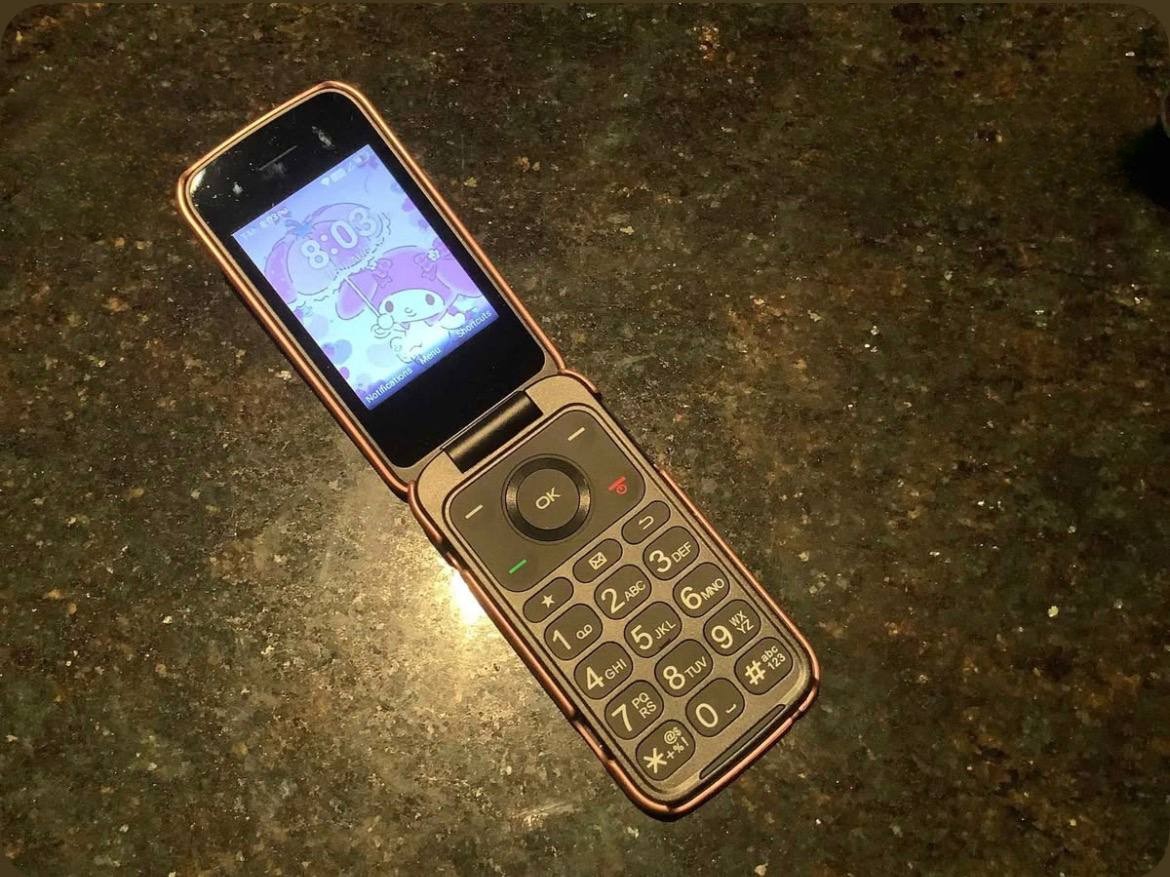
I woke up last Tuesday and realized my brain felt like a browser with four hundred tabs open, and half of them were playing audio I could not find. My weekly screen time report had just clocked in at 79 hours. That is nearly five hours a day spent looking at a glass rectangle while my actual life happened in the periphery. The idea of ditching my iPhone was nauseating, but the burnout was worse. I decided to trade my smartphone for a basic flip phone for seven days. I called it my digital minimalism experiment, but by day five, it turned into a zero-filter disaster that forced me to face exactly how much I have outsourced my basic human functions to an algorithm.
Direct Answer: What happens when you switch to a dumbphone?
Trading a smartphone for a dumbphone for seven days typically results in a significant reduction in screen time burnout and improved mental clarity. However, while you gain focus, you lose the “filter” of modern convenience. The “Zero-Filter Disaster” refers to the harsh realization that modern infrastructure (banking, navigation, and QR-dependent services) is increasingly incompatible with analogue devices, making living without a smartphone in 2026 a logistical challenge that requires significant manual workarounds.
What Happened to Me: My 7-Day Log
I started by buying a refurbished TCL flip phone for about twenty dollars and swapping my SIM card. The immediate feeling was one of “phantom vibration syndrome.” For the first 48 hours, I reached for my pocket every time there was a lull in conversation or a red light at an intersection. I felt a twitch in my thumb, a muscle memory looking for the infinite scroll of a social feed.
By day three, the withdrawal shifted into what I can only describe as a “quiet brain.” Without the constant dopamine loops of notifications, I found myself looking at the trees during my walk. I started engaging in analogue hobbies for adults that I had neglected for years, like actually finishing a physical book and journaling with a pen. I felt present. I felt calm. I thought I had won the game of smartphone addiction recovery.
Then, day five hit. I call this the Zero-Filter Disaster. I went to a local bistro that had replaced all physical menus with QR codes. I sat there like a relic from the nineties, unable to see the price of a sandwich. Later that afternoon, I tried to pick up a prescription, only to find the pharmacy required a 2FA (two-factor authentication) code sent to an app I no longer had access to. The most humbling moment? Getting lost four miles from my house because I had forgotten how to navigate without a blue dot telling me where to turn. The “filter” of the smartphone, which smooths over the frictions of modern life, was gone, leaving me exposed to the raw, often frustrating reality of a world built for the connected.
The Reality of Living Without a Smartphone in 2026
| Challenge Area | Smartphone Experience | Dumbphone Reality |
|---|---|---|
| Navigation | Real-time GPS and traffic updates | Physical maps or memorizing turns beforehand |
| Payments | Apple/Google Pay and QR scanning | Physical cards and cash only |
| Social Interaction | Instant messaging and media sharing | SMS (T9) and voice calls. No group chats |
| Boredom | Infinite scroll and dopamine loops | Forced reflection and analogue hobbies |
| Logistics | App-based banking and rewards | In-person or phone-call based services |
What Actually Works for Smartphone Addiction Recovery
If you are feeling the weight of screen time burnout, jumping straight to a flip phone might be too jarring for a permanent lifestyle. However, the experiment taught me what actually moves the needle for long-term health:
- The Physical Barrier: Using a device like the Light Phone II or a Nokia 2780 creates a physical hurdle that “Do Not Disturb” mode simply cannot match.
- Intentional Living: I realized I do not need a smartphone for “everything.” I need it for three things: Maps, Music, and Banking. Everything else is a distraction.
- Analogue Backups: Keep a physical map in your car and a paper notebook for your to-do lists. Relying on your brain to remember things actually improves cognitive function over time.
- The “Dumb-Down” Strategy: If you cannot commit to a flip phone, delete every app that has a “feed.” If you have to log into Instagram via a mobile browser, you will find you use it 90 percent less.
Common Mistakes When Switching to a Feature Phone
The biggest mistake I made was assuming the world would accommodate my “digital detox.” It does not. I failed to print out directions for a meeting, assuming I could “just figure it out.” I also underestimated the social isolation. Missing the group chat meant I missed the change of venue for a friend’s birthday dinner. If you are going to try this, you must inform your inner circle that you are “going dark” on data and give them your “voice only” number. Another mistake is forgetting that T9 predictive text is a skill that has likely atrophied in your brain; texting a simple “I am on my way” took me nearly two minutes on the first day.
FAQ
Is it okay to stop using a smartphone completely?
Yes, it is possible and many report a more “peaceful” life, but it requires significant lifestyle adjustments. You will need to carry physical cards, a dedicated camera, and often a standalone GPS unit for travel.
How do I overcome smartphone addiction?
Start with a weekend digital minimalism experiment. Remove non-essential apps, turn off all non-human notifications, and designate “phone-free” zones like the bedroom and the dining table.
What are the best dumbphones for 2026?
The Light Phone II is excellent for those who want a sleek, minimal aesthetic. The Nokia 2780 is a durable, classic flip phone option, while the Punkt MP02 offers high-end build quality for those focused purely on voice and text.
Next Steps for Your Digital Detox
If you are ready to reclaim your attention, start small. You do not have to sell your iPhone tomorrow. Try leaving it in a drawer for a full Saturday. See how the “Zero-Filter” reality feels. You might find that while the logistics are harder, the “presence” you gain is worth the price of a few missed QR codes.
The part nobody warns you about is navigation. I live in a city I know reasonably well, but three times that week I ended up walking fifteen minutes in the wrong direction because I could not check a map. The third time it happened I was late to meet a friend and had to ask a stranger. It felt humiliating in a way that surprised me. We have completely outsourced the ability to ask for help to a piece of glass.
After the seven days I switched back to my smartphone, but I kept three changes permanent. I deleted every social app from my home screen so they require a deliberate search to open. I bought a cheap paper map of the city, which lives in my bag and has been useful exactly once. And I now leave my phone in another room for the first hour of every morning. The dumbphone experiment did not convince me to give up my smartphone. It convinced me that the problem was never the device, it was the absence of any friction between me and the dopamine loop. Add friction, and the loop slows down.