I Stopped Using AI for One Week: How My Brain Rediscovered Original Thought
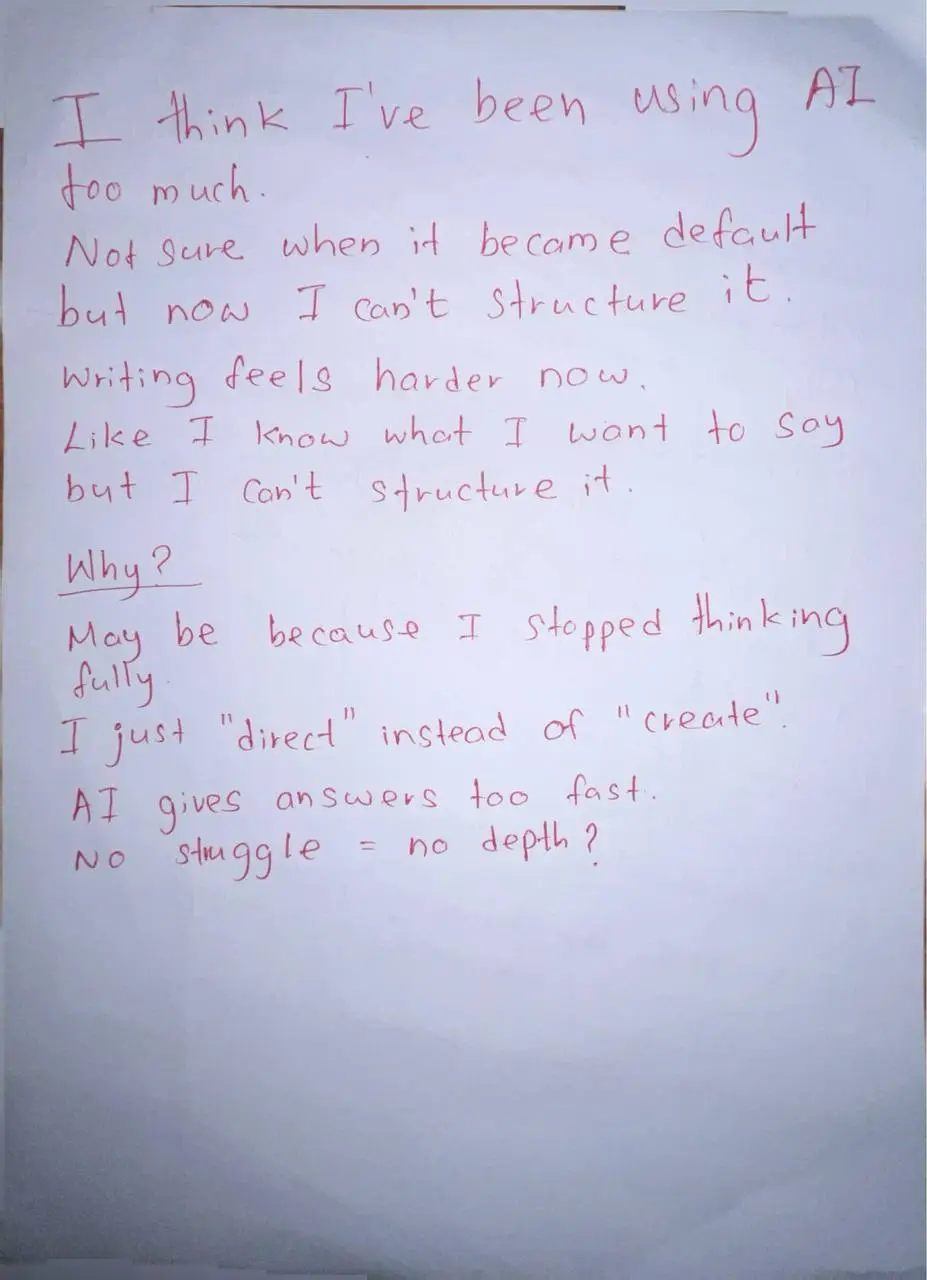
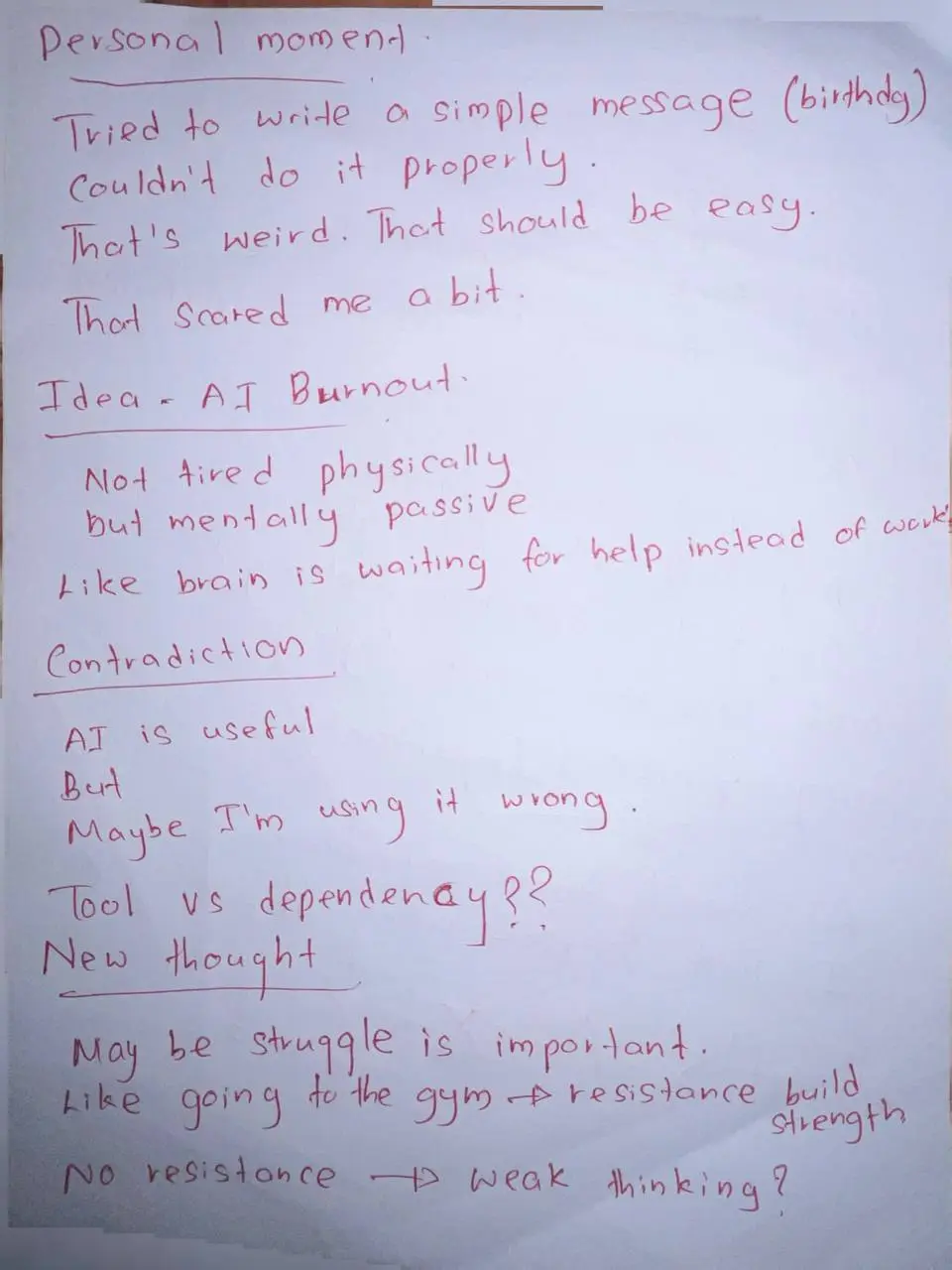
I realized I had a problem when I tried to write a birthday message to my sister and found myself staring at a blank cursor, waiting for a “Spark” icon to appear. I had spent the last six months outsourcing every professional email, every blog outline, and even my grocery lists to Large Language Models. My brain felt like a limb that had been in a cast for too long: it was thin, weak, and completely incapable of supporting its own weight. I was suffering from AI burnout, a state where my capacity for original thought had been replaced by a dependency on predictive text. To save my cognitive health, I decided to go cold turkey for seven days.
Direct Answer: Can You Reverse AI Brain Rot?
Stopping AI usage for one week reverses “AI brain rot” by forcing the prefrontal cortex to re-engage with complex problem-solving. This experiment highlights that while AI offers efficiency, it often bypasses the “productive struggle” necessary for deep focus. By implementing critical thinking exercises and focusing on human-led content, individuals can restore cognitive agency, improve concentration, and rediscover a unique creative voice that feels distinct from automated outputs.
The Rise of AI Burnout: Why My Brain Felt “Rotted”
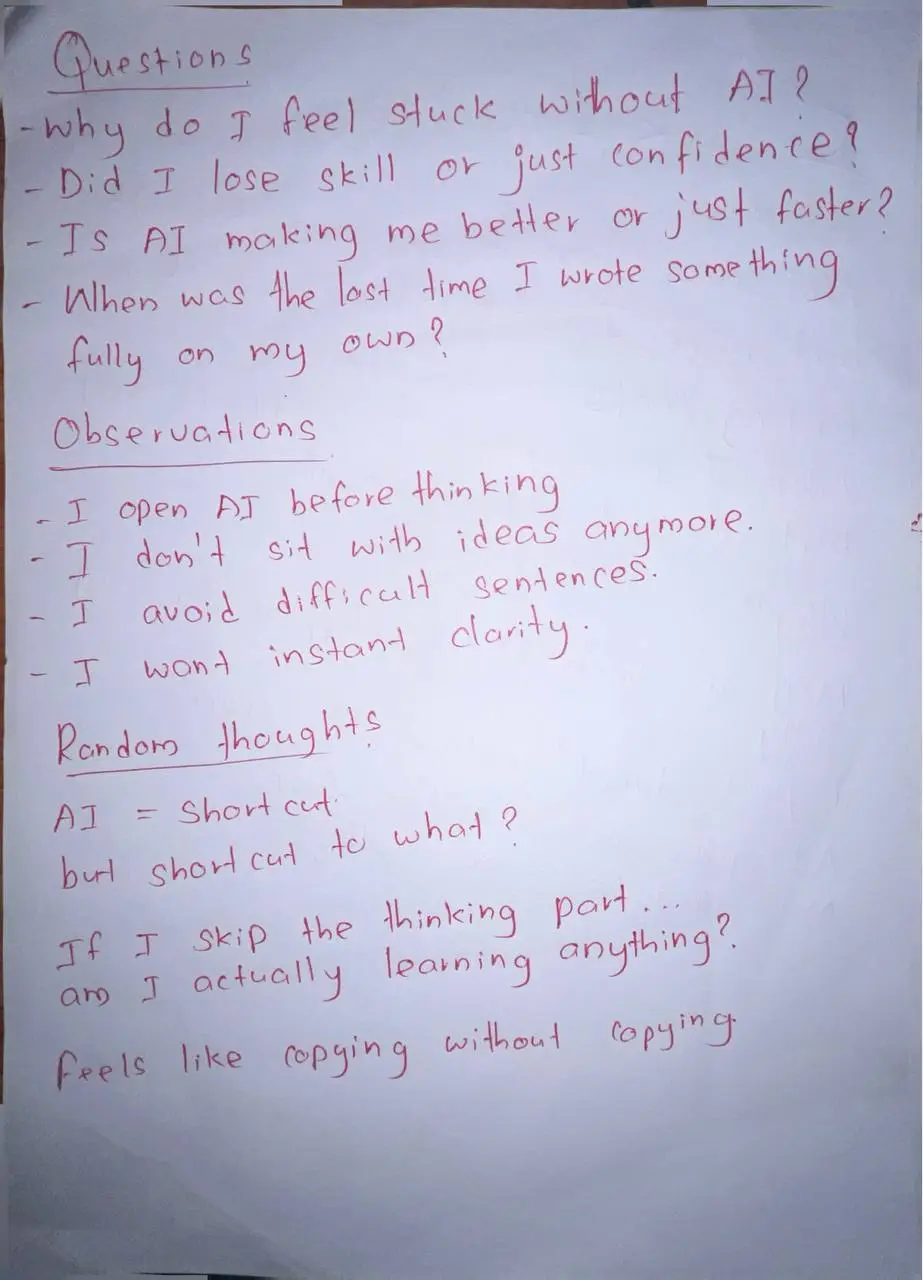
In the beginning, tools like ChatGPT felt like a superpower. I could produce 3,000 words a day without breaking a sweat. But over time, the quality of my internal monologue started to degrade. I stopped asking “What do I think about this?” and started asking “How would an AI frame this?” This is the instant gratification trap. AI provides the answer but erodes the process of inquiry. When you remove the struggle of synthesis, you remove the learning. My brain was losing its ability to hold complex, contradictory ideas because I was constantly looking for the “optimized” middle ground that LLMs favor.
The 7-Day Experiment: Methodology and Rules
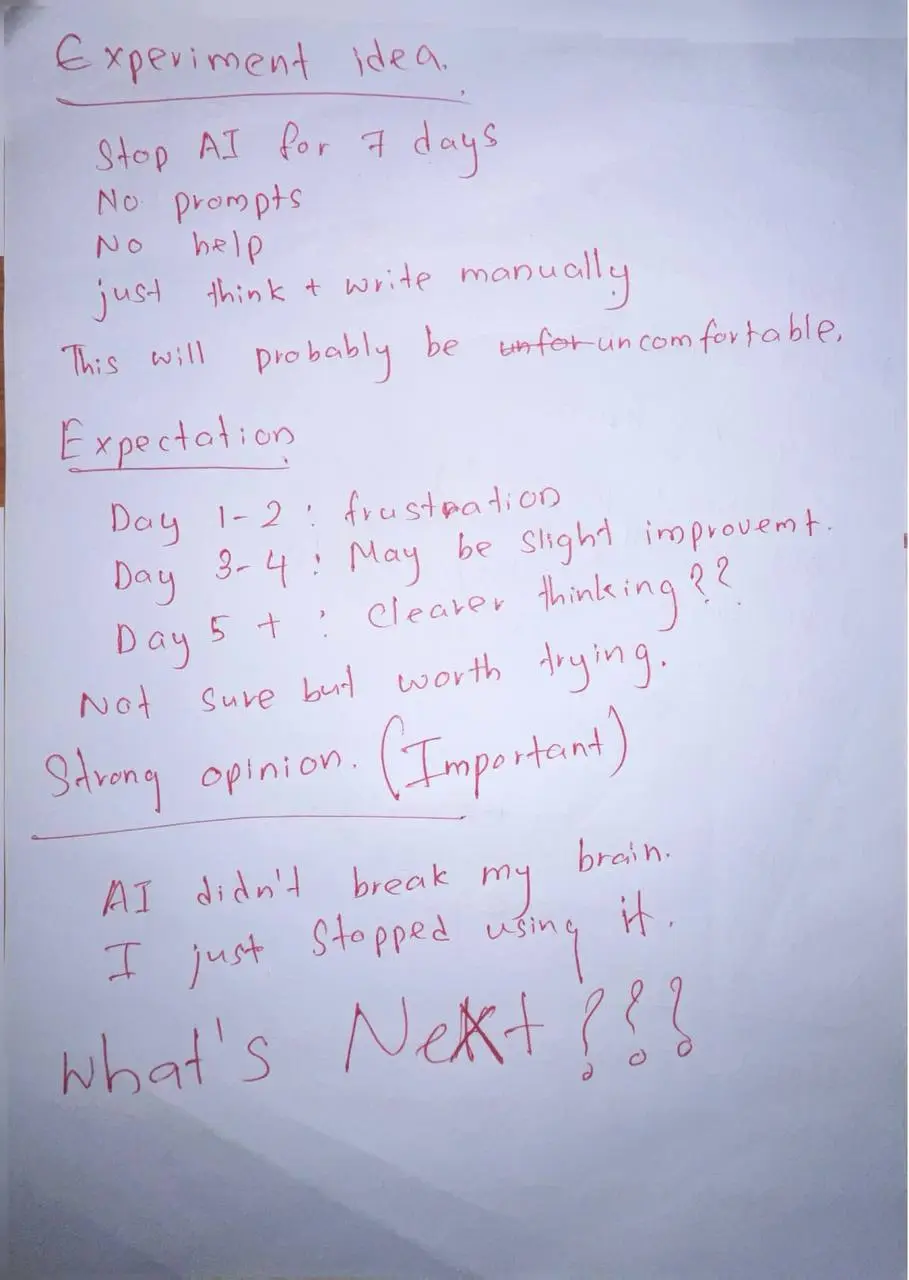
I set strict boundaries for this detox. I deleted the apps from my phone and logged out of every browser version of Claude, Gemini, and ChatGPT. I also disabled the AI-assisted search features in my browser. My goal was to inhabit my “First Brain” again rather than relying on a digital “Second Brain.”
- The Constraints: No drafting, no brainstorming, and no “polishing” with AI. If a sentence felt clunky, I had to fix it manually.
- The Tools: I returned to an analog notebook for initial ideas and used standard search engines to find primary sources.
- The Focus: Building a tolerance for the “uncomfortable silence” of a blank page.
The Cognitive Recovery Timeline (Day 1 – Day 7)
Days 1-3: The Withdrawal Phase
The first three days were brutal. I experienced a specific type of “brain fog” where I knew what I wanted to say but couldn’t find the structure. I felt a constant, itchy urge to just “run this by the bot.” My productivity dropped by about 60 percent. I spent two hours on an email that would have taken two minutes with a prompt. It was discouraging, but it revealed exactly how much of my cognitive load I had been offloading.
Days 4-5: The Breakthrough
Something shifted on Thursday. Instead of looking for a shortcut, my brain started making its own connections again. I noticed that my writing started to include more personal anecdotes and weirder, non-linear metaphors, things an AI would never suggest because they are statistically unlikely. The “productive struggle” began to feel rewarding rather than frustrating. My thoughts were slower, but they felt heavier, like they actually belonged to me.
Days 6-7: Rediscovering Originality
By the end of the week, I had written an entire project proposal from scratch. It didn’t sound “professional” in the way an AI does, it sounded like a person. It had a voice. I realized that human-led content is valuable precisely because it is imperfect and idiosyncratic. My concentration improved, and the “AI rotted” feeling of being a passive observer of my own work had vanished.
Real Cost Breakdown of My Recovery
This experiment did not cost money, but it had a significant impact on my time and resources:
- Writing Time (1k words): 15 minutes (AI) vs. 3 hours (human) → +165 minutes
- Research Depth: Surface (AI summary) vs. Deep (primary sources) → Significant effort
- Mental Fatigue: Low (AI) vs. High (human) → Increased exhaustion
- Subscription Costs: $20/month (AI) vs. $0 → -$20/month
3 Critical Thinking Exercises to Rewire Your Brain
If you feel like your brain is losing its edge, these exercises helped me regain my focus during the week:
- Exercise 1: The Analog Draft Method
Before opening your laptop, write your first 300 to 500 words by hand. This slows your thinking and prevents the “optimization” mindset. - Exercise 2: Intentional Boredom
Avoid notifications and AI tools before 9:00 AM. Let your brain generate its own ideas without external input. - Exercise 3: The Socratic Search
Instead of asking AI, go to primary sources like books or Wikipedia. Follow citations manually to build stronger information-processing skills.
Why Human-Led Content Wins in the Age of AGI
We are entering an era where AI-generated text is everywhere. Because AI is trained on averages, it produces content that is statistically probable but emotionally flat. This creates an “uncanny valley” of writing that feels hollow.
Human-led content stands out because:
- Voice: Emotional and nuanced instead of predictable
- Process: Exploration instead of optimization
- Cognitive Load: Active thinking instead of passive consumption
- Originality: New synthesis instead of recombined patterns
Choosing to think deeply is now a competitive advantage. AI can recombine data, but it cannot replicate lived experience.
| Metric | With AI tools | AI-free week |
|---|---|---|
| Emails written per day | 18 | 9 |
| Average time per task | 8 min | 22 min |
| Original ideas noted | 2/day | 7/day |
| Mental fatigue rating (1-10) | 6 | 5 |
| Writing quality (self-rated 1-10) | 6 | 8 |
FAQ
Does relying on AI cause actual cognitive decline?
Not permanently, but over-reliance can weaken skills like critical analysis and structured thinking. Like muscles, these abilities fade without use.
How do I stop my brain from feeling AI rotted?
Start with a short detox. Read physical books, write by hand, and spend time away from screens to rebuild focus.
Can AI detectors flag my original work as AI?
Yes. Ironically, sounding too “perfect” can trigger flags. A unique, slightly messy, human voice is your best defense.
Next Steps for Your Brain Detox
Start small. Choose one project this week and complete it without using AI. It will take longer and feel harder, but you’ll rebuild your ability to think independently.